
From Palo Alto to Harvard: A 26-Year Study in Love, Strategy, and Saying No
By Amy Andersen, Founder and CEO of Linx Dating
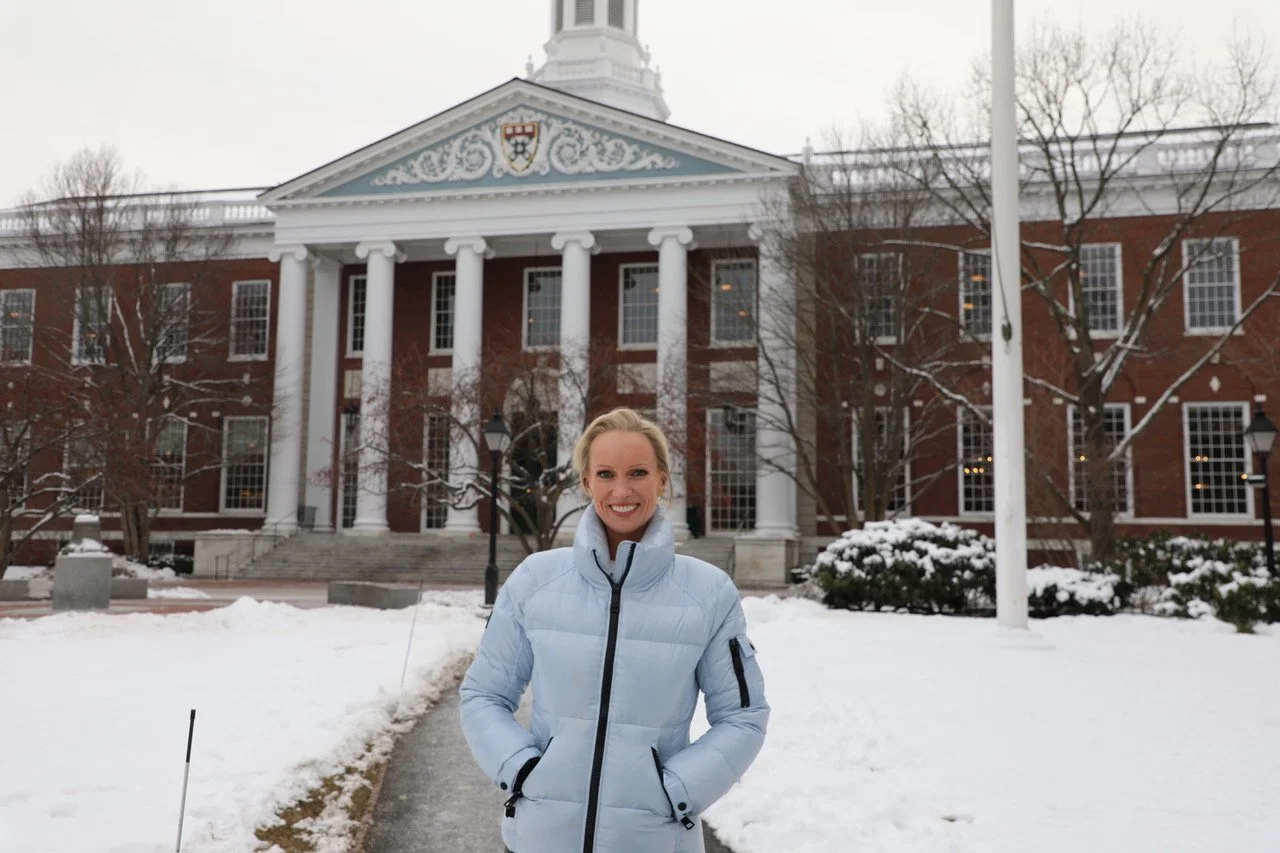
Last week, I flew to Boston to speak at Harvard Business School- and I’m still sitting with what that truly means.
Over the summer, after a Zoom with HBS Professor Debora Spar and her team, I received an email that quite literally stopped me in my tracks:
“As we previously discussed, it would be lovely to have you come as a guest to my course about the markets for dating, marriage, and children this coming January. We’ll be talking about the commerce of connection, and it would be great to have you here to share your expertise and wisdom.”
Once the Zoom ended and my laptop closed, I dropped to the floor and cried.
Not out of ego- out of disbelief.
Me? Amy Andersen? Speaking at Harvard Business School?
It was a true pinch-me moment. One that immediately sent me back to the very beginning.
In 2000, when I was first living in Palo Alto, the idea for Linx was hatched. At the time, a boyfriend told me, “As long as we’re together, you’re not allowed to start that company.” I didn’t yet have language for it, but I do now: jealous, controlling, limiting.
Thankfully, he dumped me.
And I channeled that heartbreak into productive energy- putting pen to paper and laying the foundation for what would become Linx Dating, officially launched in December 2003.
Fast forward 26 years.
I’ve had the privilege of supporting extraordinary, high-profile, deeply human clients- men and women navigating love, partnership, and commitment in one of the most algorithm-driven regions in the world. I’ve also lived the complexity of building and sustaining a small, niche business in Silicon Valley while technology continues to reshape how we connect.
As I shared in the classroom, when I started, there were just a small handful of people in this space. Now it’s a saturated market of matchmaking firms- big and small. Some extraordinary, and many who, net net, should not be in business.
Being inside Professor Spar’s classroom was fascinating on every level. The campus- historic, stately, grand. The students- brilliant, curious, engaged, and so kind to me—asking truly sophisticated questions.
We spent much of the class unpacking the difference between dating apps and matchmaking:
low-signal, high-volume dating (the apps) versus high-signal, lower-volume (Linx) approaches to meeting and connecting.
Students asked whether, when clients are paying significant sums, I always deliver exactly what they ask for based on precise, scrutinized metrics- or whether I ever deviate. I loved this nuanced question. In fact, I do deviate, and hopefully that is why a human is hiring another human… the art versus science, my honest and very honed pattern recognition based on thousands and thousands of conversations over the years.
They wanted to understand intuition versus structure. Flexibility versus rigidity.
They asked about the Linx contract, success bonuses, and what clients are really investing in.
That opened the door to what I believe is the most complex part of my work: the deep strategy that goes far beyond identifying the “right” match.
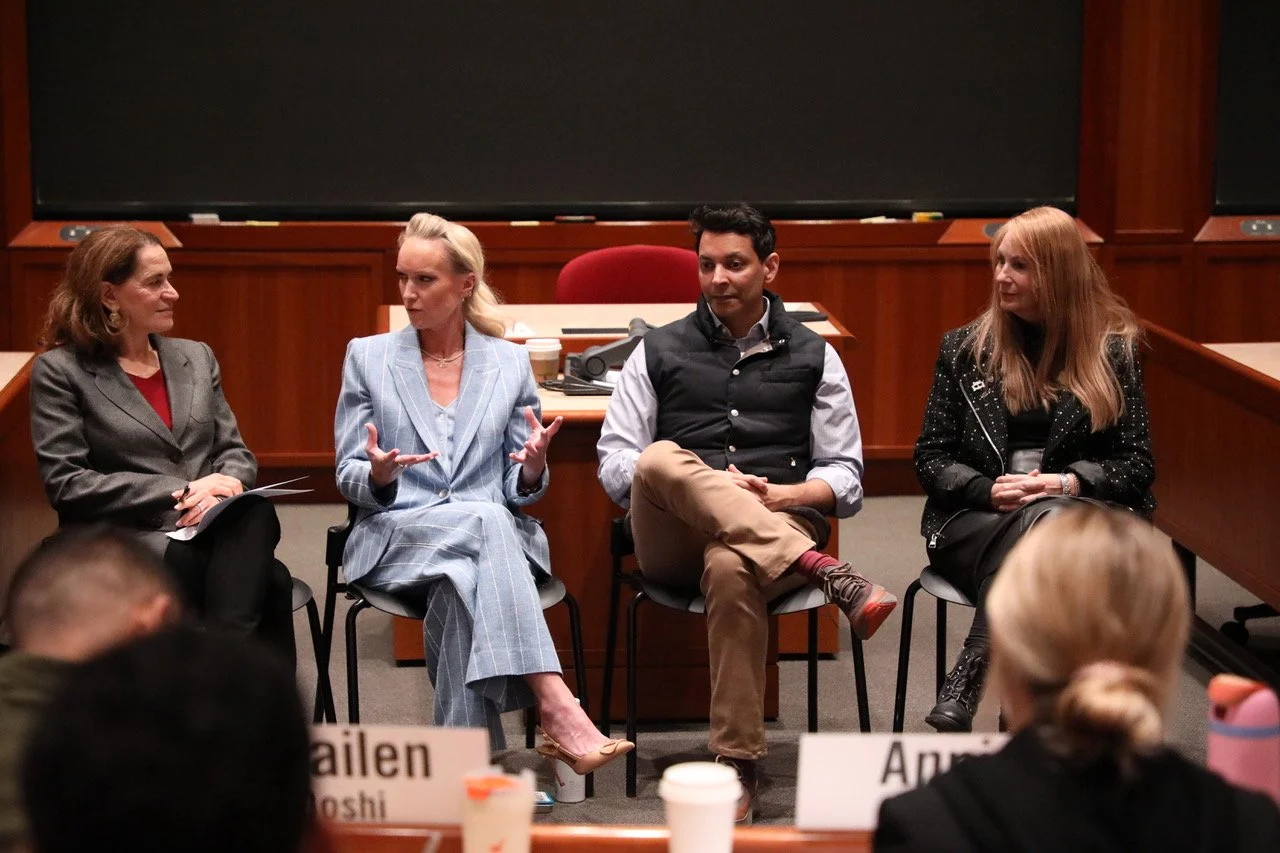
For VIP clients, my work- my real job- begins after I have identified their match and aced that in the hole. Strategy starts when they begin getting more serious about their Linx match. My goal, as I shared with the students, is about keeping them calm, focused, and grounded- helping them make intelligent decisions rather than reactive ones. This is truly where the human experience shines much brighter and is far more capable as compared to machines. Machines are not yet capable of this extremely nuanced, nimble, tiptoes navigation based on countless factors. I challenge a machine to do what I do!
Strategy, as I shared, is about deep personalization, pattern recognition, emotional regulation, and staying aligned with long-term goals when chemistry, anxiety, or impatience threaten to take over one’s nervous system.
After the class, we talked candidly about why dating feels so hard today. The confusion around social norms. How to act, behave, and court- especially with the residual effects of the MeToo movement. We discussed flirting, short-term versus long-term thinking in matchmaking, what makes for a solid partnership over time, whether you can truly put a price on love, and what people are willing to invest to find their forever person.
As a group, we deconstructed the value of machines versus humans- dating apps versus human-led matching- and what is gained and lost in each model.
I was seated alongside Dinesh Moorjani, co-founder of Tinder, and a veteran matchmaker who’s been in the business for 45 years. Her greatest masterpiece? Matching her own daughter- an HBS student- who happened to be sitting in the classroom. She doesn’t charge for her work. She does it purely for love and for good in the world. Godspeed, my fellow matchmaker.
Joining us via Zoom was Sam Yagan, co-founder of OKCupid.
After class, I spent time talking with a handful of eager-to-learn students. One of the most meaningful moments came when I shared something very real about my business that often surprises people: I turn away many prospective clients—in fact, most people. Linx is low-volume, elite, and structured so that I only take on a percentage I can truly handle and deliver real results for. This is what makes becoming a VIP particularly special. Matchmaker, confidant, therapist at times… my role evolves for my clients.
In fact, just recently, I declined working with a senior tech executive who was extraordinarily particular- so much so that what he was seeking crossed into something that felt fetishized rather than relational. He did not like being told no. But I was very clear: I’m simply not interested in working that way.
Matchmaking, at its core, is about respect, humanity, and emotional maturity- not about commodifying people or indulging hyper-specific checklists devoid of empathy. The students leaned in. They respected that boundary. And I think it landed as an important reminder that saying no in life is just as much a part of ethical leadership as saying yes.
Later that day, I spent quality time with Professor Spar in the privacy of her office. Professor Spar- whose title is the Jaime and Josefina Chua Tiampo Professor of Business Administration and Senior Associate Dean for Faculty Development and Research—and I sat down for a fabulous on-camera Q&A that I’ll be sharing gradually.
My questions centered on her book, Work, Mate, Marry, Love, and her academic paper Does Marriage Have a Future?- both of which explore how machines increasingly shape our most human decisions.
I ended the day filled with gratitude and deeply energized for what’s next.
Energized by the students.
By the intellectual exchange with Professor Spar.
And by a richer, more nuanced understanding of the 2026 dating market, the economics of love, and the true complexity of modern relationships.
As I told one student afterward: when we peel back the layers, strip away the noise, and stop overcomplicating what connection should be, real results happen!
There are far more intelligent and strategic ways to date in 2026 and to find your forever person. The takeaway is simple- though not easy: be clear about who you are, honest about what you’re looking for, intentional with your time, and thoughtful rather than reactive in your approach.
And perhaps… reach out to an expert who’s seen a thing or two in her day.
