
Love in the Age of AI: Why Human Connection May Become Our Greatest Luxury
By Amy Andersen, Founder and CEO of Linx Dating
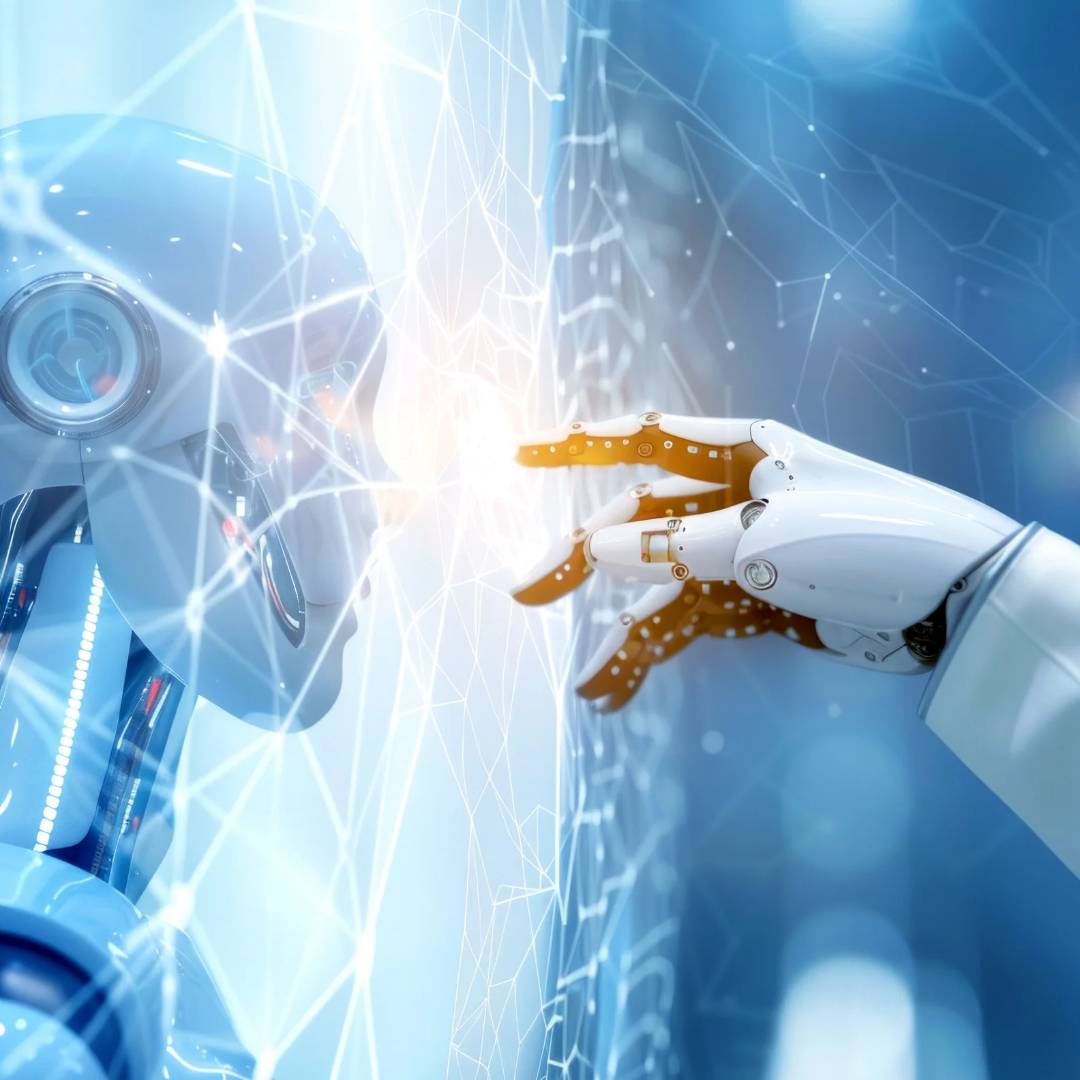
I recently read about a fascinating conversation happening inside the world of artificial intelligence. Some of the people building increasingly sophisticated AI systems are wrestling with questions that, until very recently, would have sounded like science fiction: Could artificial intelligence ever become conscious? Could it experience something resembling emotion? If it did, would humans have moral responsibilities toward it?
These are enormous questions, and I certainly don’t pretend to know the answers. But they made me think about something much closer to home: love.
We are living through one of the most technologically saturated periods in human history. We can ask AI to write a dating profile, analyze a text message, suggest what to wear on a date, tell us whether someone’s behavior is a red flag, and help us craft the perfect response when we don’t know what to say. Dating apps can sort thousands of people according to age, geography, education, height, religion, politics, hobbies, and dozens of other variables. Technology has given us extraordinary tools for meeting and understanding one another.
And yet, for all of that sophistication, people seem no less confused about love. Maybe that is because there is something about romantic connection that refuses to be optimized.
AI can generate language that sounds empathetic. It can simulate warmth. It can remember what you told it. It can respond immediately and tell you exactly what you might want to hear. What it cannot currently establish that it possesses is the lived, reciprocal experience of human romantic love.
And when I say lived, I mean lived. Another person’s breath when they’re close to you. The beat of two human hearts. Skin against skin. Touch. Scent. The warmth of someone’s body. Eye contact that suddenly changes the energy between you. The nervousness before a first kiss. The feeling of someone’s hand reaching for yours without either of you saying a word.
These things can sound almost insignificant compared with the enormous technological advances happening around us. But they aren’t insignificant at all. They are fundamentally human.
When another human being loves you, there is another independent person on the other side of the equation. They have their own history, fears, desires, flaws, needs, preferences, moods, and dreams. They can misunderstand you. They can challenge you. They can disappoint you. They can surprise you. And ultimately, they have the freedom to choose you. That unpredictability can make relationships difficult, but I also think it’s part of what makes love so extraordinary.
We May Be Over-Optimizing Dating
After more than two decades as a matchmaker, I’ve watched technology transform dating. Some of those changes have been wonderful. We have access to people we never would have encountered twenty years ago. Long-distance relationships are easier to maintain. People can learn about compatibility and relationships in ways previous generations simply couldn’t.
But there has also been a subtle shift toward treating dating like an optimization problem. People arrive with increasingly detailed specifications for who they believe their partner should be. They research someone online before meeting them. They analyze texts. They compare multiple people simultaneously. They look for immediate chemistry and quickly move on when it isn’t there.
We have become very efficient at eliminating people. I’m not convinced we’ve become equally good at discovering them.
Human beings are layered. Some of the qualities that ultimately make someone extraordinary aren’t immediately obvious across a dinner table, much less on a dating profile. Kindness reveals itself. Character reveals itself. Humor can take time. Emotional safety develops. Attraction can deepen.
Even physical chemistry can surprise us. Someone’s photograph cannot tell you how their eyes look when they laugh. A profile can’t capture the sound of their voice, their scent, the way they move, or the inexplicable electricity that can happen when two people sit across from each other, and something begins to shift. You have to actually be there.
This is why I talk so much at Linx about the slow burn. Not every meaningful relationship begins with fireworks. Sometimes it begins with curiosity. You enjoyed dinner. You laughed. You learned something. You aren’t quite sure how you feel yet, but you’d like to see the person again. That is enough.
Bring Back a Little Mystery
Another casualty of technology is mystery. Before we meet someone today, we can potentially know where they went to college, where they work, where they vacationed last summer, who their friends are, what political causes they support, what restaurants they frequent, and what they looked like ten years ago. But where is the fun in knowing everything?
There is something deeply romantic about sitting across from someone and discovering them organically. Tell me the story. What happened next? Why did you move there? What was your childhood like? What do you dream about doing someday?
Those questions create intimacy because another human being is revealing themselves to you in real time. I think dating could benefit from bringing back a little mystery.
Less Texting. More Living.
I also think we’ve mistaken constant communication for connection. Two people can text throughout the day and still barely know each other.
Real intimacy happens through shared experience. It’s the expression on someone’s face when they tell you something important. It’s laughing unexpectedly. It’s walking through a city together. It’s cooking dinner. It’s getting lost on vacation. It’s meeting someone’s friends. It’s sitting quietly together and discovering that silence doesn’t feel uncomfortable.
And eventually, if the connection grows, intimacy becomes physical too. Holding hands. A first kiss. The familiar scent of the person you love. Skin against skin. Falling asleep next to someone and waking up beside them. Feeling another person’s breath and heartbeat close to yours.
Technology can describe those experiences. It cannot currently demonstrate that it experiences them. That distinction feels increasingly important.
So use technology to facilitate the relationship, but don’t let technology become the relationship. Text to say hello. Make the plan. Then go live it.
Maybe Dating Needs to Become More Old-Fashioned
The more technologically sophisticated our lives become, the more I find myself appreciating some very old-fashioned aspects of courtship.
Make the reservation. Dress for the date. Show up on time. Put the phone away. Look someone in the eyes. Ask good questions. Listen to the answers. Flirt. Be thoughtful. Touch someone’s hand when the moment feels right. Walk someone to their car. If you enjoyed yourself, say so. And if you’re interested, dare to pursue it.
None of those things require an algorithm. They require presence.
Human Connection May Become More Valuable, Not Less
I am not anti-technology. Far from it. I live and work in Silicon Valley, and technology has transformed nearly every aspect of our lives in extraordinary ways. AI will undoubtedly become even more integrated into how we communicate, work, learn, travel, and perhaps even how we date.
Use it. Let it make your life easier. Let it introduce you to people. Let it help you think. But don’t outsource the most important parts of being human.
Don’t let an algorithm decide whether someone deserves a second date. Don’t ask AI to tell you exactly how you feel. Don’t spend so much time analyzing a relationship that you forget to experience it. And perhaps most importantly, don’t confuse being perfectly understood by technology with being genuinely known, wanted, touched, and loved by another human being.
Real love is wonderfully inefficient. It takes time. It asks us to tolerate uncertainty. It requires vulnerability, patience, forgiveness, humor, courage, and occasionally a willingness to be wrong about the person sitting across from us.
It is someone’s breath. Their scent. Their skin. Their hand reaching for yours. The beat of two human hearts connecting.
In a world increasingly designed around speed, convenience, prediction, and optimization, perhaps the radical thing will be to slow down. To peel back the layers. To remain curious. To put the phone away. To look someone in the eyes. To reach for their hand. And to let another imperfect, fascinating human being surprise you.
Because the future may belong to artificial intelligence, but love, at its most extraordinary, is still profoundly human.
